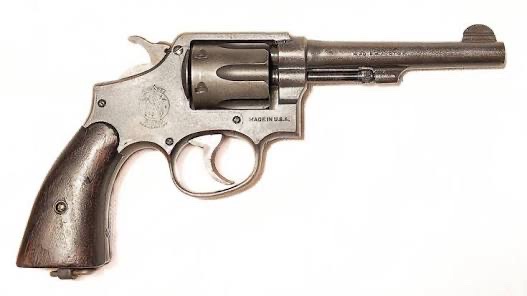
The Smith & Wesson Victory Model was one of the most important Allied sidearms of the Second World War. Based on the company’s proven Military & Police K-frame revolver, it was produced from 1942 after the United States entered the war, with the distinctive “V” serial number prefix giving the revolver its now-famous name. Britain ordered large numbers to supplement production of the Enfield No. 2 following the heavy equipment losses at Dunkirk, with most examples chambered for the British .38/200 (.38 S&W) cartridge. Rugged, reliable, and simple to maintain, the Victory Model quickly earned an excellent reputation among British and Commonwealth forces.
Designed for military service, the Victory Model featured a six-shot swing-out cylinder, a 5-inch barrel on most British contract revolvers, fixed sights, double-action operation, a lanyard ring, and a durable parkerised finish that was better suited to wartime production than the polished blue finish of pre-war commercial revolvers. Later production incorporated an improved hammer block safety, creating the desirable “SV” serial prefix variants. Although lacking the refinement of earlier commercial models, its reliability in harsh environments made it a trusted companion on battlefields across Europe, North Africa, and the Pacific.
Victory Models saw widespread service with the British Army, Royal Navy, Royal Air Force, Commonwealth forces, police units, and the Home Guard, while .38 Special versions were also issued to United States military personnel, particularly naval security, military police, and aircrew. After the war, many remained in military and police service throughout the Commonwealth before eventually being sold as surplus. Some British contract revolvers were later converted to fire .38 Special, although original .38/200 examples remain the most desirable among collectors today.
For collectors, the Victory Model represents far more than a wartime revolver—it symbolises the industrial partnership between the United States and Britain during one of history’s greatest conflicts. Examples retaining matching serial numbers, original parkerised finish, British military markings, and documented provenance are especially prized. Combining historical significance, dependable engineering, and widespread wartime service, the Smith & Wesson Victory Model remains one of the defining military revolvers of the Second World War and a worthy addition to any serious military firearms collection.
Up until recently I thought the Webley MKVI was the primary sidearm for the commonwealth forces in WW2. The Webley was definitely still around but the new primary revolver was the Enfield No2 mk1
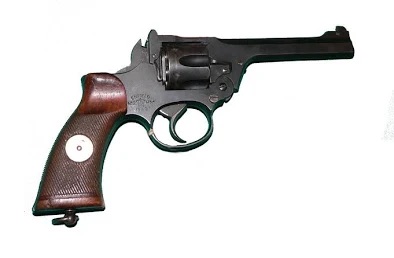
The Enfield No. 2 Mk I is one of the most recognisable British service revolvers of the 20th century. Produced between 1930 and 1957, it fired the .38 S&W cartridge—often referred to in British service as “.380”—and became a standard sidearm across the British Empire during the Second World War.
After World War I, British military planners moved away from the powerful but heavy-recoiling .455 revolvers. The goal was a lighter, more manageable sidearm that could be quickly mastered by soldiers with minimal training. The answer came in the form of a .38 calibre revolver firing a heavy 200-grain bullet, designed to be effective at close range with less recoil and faster follow-up shots.
Although heavily influenced by Webley designs, the Enfield was developed at the Royal Small Arms Factory. It retained the classic top-break design, allowing for very fast reloading thanks to its automatic ejector, one of the defining features of British revolvers
There were three primary versions:
Mk I (1931) – Featured a spurred hammer and could be fired in both single and double action.
Mk I* – The most common wartime variant, with a spurless hammer and double-action-only operation for simplicity and faster training.
Mk I** – A simplified wartime production model introduced in 1942, though short-lived due to safety concerns.
Most Mk I revolvers were later converted to Mk I* standard during wartime servicing.
The Enfield No. 2 excelled in its intended role: close-quarters combat. Its relatively light trigger in double-action mode made it effective for rapid fire at short distances, though it wasn’t ideal for precision shooting beyond about 15 yards.
Soldiers had mixed opinions—while it was practical and easy to use, some preferred alternatives from Smith & Wesson, Colt, or Webley, particularly due to the heavier double-action trigger pull on the Mk I*.
Originally designed for the .38/200 cartridge with a 200-grain lead bullet, the revolver later used a 178-grain full metal jacket round during WWII to comply with international conventions. Both types saw combat use due to wartime supply demands.
Although officially declared obsolete after World War II, the Enfield No. 2 remained in service in some roles until 1969. Its widespread use across the British Empire—and even limited production in places like Australia—cemented its place as a classic military sidearm.
From a collector’s perspective, the Enfield No. 2 offers a fascinating blend of practical wartime design and subtle variation between models. Whether it’s a well-worn Mk I* or a rarer early Mk I, each example tells a story of adaptation and necessity in a changing era of military firearms.
If you spend any time around old service revolvers, sooner or later you’ll come across a Webley—and once you do, it’s hard not to appreciate them. From a collector’s point of view, these aren’t just old British sidearms; they’re some of the most character-filled and mechanically satisfying revolvers ever made.
What Makes a Webley a Webley?
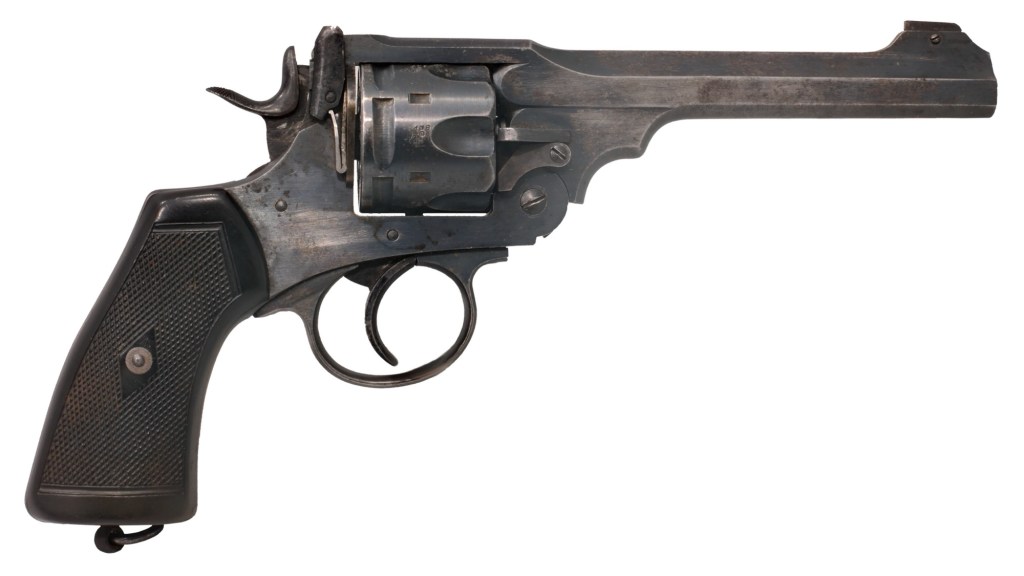
At its core, the Webley is all about that top-break design. Press the latch, hinge the frame open, and the extractor kicks out all the spent cartridges in one smooth motion. It’s quick, practical, and honestly a bit addictive to play with (carefully, of course).
This “self-extracting” system made the Webley incredibly efficient for its time—far faster to reload than most solid-frame revolvers of the late 1800s.
Chambered primarily in .455 Webley, these revolvers packed serious punch. Among top-break designs, they’re about as powerful as it gets, which only adds to their appeal today.
A Bit of History (Without Getting Too Dry)
Webley revolvers go back to the mid-1800s, starting with early cap-and-ball designs in the 1850s. By the 1870s, the company had moved into the hinged-frame revolvers that would define the brand.
Some highlights collectors tend to appreciate:
Webley-Pryse (1877) and Webley-Kaufman (1881): Early steps toward the classic top-break system Webley RIC (Royal Irish Constabulary): A sturdy, solid-frame revolver with real historical charm British Bulldog: A compact, pocket-sized revolver that’s still widely collected today
But the real legacy comes from the military models.
Military Service: Where Webley Earned Its Reputation
The Early Days to the Boer War
The British Army officially adopted the first Webley service revolver—the Mk I—in 1887. It replaced earlier, less reliable designs and quickly proved itself.
By the time of the Boer War (1899–1902), the Mk IV had become the standout model. Officers often purchased them privately, which is why you’ll still find quite a few Mk IVs with interesting service histories.
World War I: The Webley at Its Peak
When the First World War kicked off, the Mk V was technically standard issue—but the older Mk IVs were still everywhere.
Then came the legend: the Mk VI (introduced in 1915).
From a collector’s standpoint, the Mk VI is the Webley to own:
Distinctive square grip Longer 6-inch barrel Built tough for trench warfare
These revolvers were used by everyone—officers, airmen, tank crews, even trench raiding parties. They handled mud, grime, and abuse remarkably well.
There were even some fascinating accessories:
Clip-on bayonets (yes, really) Early speedloaders Shoulder stocks to turn it into a sort of carbine
World War II and the End of Service
By WWII, the British military had moved toward the smaller .38/200 calibre, leading to the Webley Mk IV in .38.
Even though the Enfield No. 2 was the official sidearm, Webleys were still widely issued due to shortages—especially the older .455 Mk VI models.
After the war, Webleys lingered in service for quite a while:
Official British service didn’t fully end until 1963 Some police forces around the world used them even longer Ammunition shortages meant many sat in storage more than they were fired
There’s even a running joke from an armourer in Germany—by the end, soldiers were issued two rounds per year. Hardly wearing them out!
The Different Marks (The Ones Collectors Care About)
The .455 service Webleys went through six main versions:
Mk I (1887): The original Mk II (1895): Improved durability and ergonomics Mk III (1897): Minor internal tweaks (rarer in service) Mk IV (1899): The Boer War favourite Mk V (1913): Designed for newer ammunition Mk VI (1915): The iconic wartime revolver
Each has its quirks, but for most collectors, the Mk IV and Mk VI are the stars of the show.
Beyond the Military Models
Webley didn’t just build military revolvers—they had a strong civilian and police market too.
A few interesting ones:
Webley-Government (WG): Popular private-purchase revolvers for officers British Bulldog: Compact and widely copied worldwide Webley-Fosbery Automatic Revolver: A bizarre but brilliant hybrid—an “automatic revolver” with a sliding upper frame
India even continued the lineage with the IOF .32 revolver, clearly inspired by the Webley design.
Why Collectors Love Them
From a collector’s point of view, Webleys tick a lot of boxes:
Mechanical charm: That top-break action never gets old Historical depth: From colonial wars to both World Wars Variety: Plenty of models, calibres, and variations to chase Affordability (relatively): Compared to some other historic firearms
They’re not just display pieces either—they feel like tools that were genuinely used, carried, and relied upon.
Final Thoughts
Webley revolvers are one of those rare collectibles that balance engineering, history, and personality. Whether it’s a well-worn Mk IV that might’ve seen the Boer War, or a chunky Mk VI straight out of the trenches of WWI, each one tells a story.
And if you ever get the chance to handle one and snap it open—you’ll understand exactly why collectors keep coming back to them.
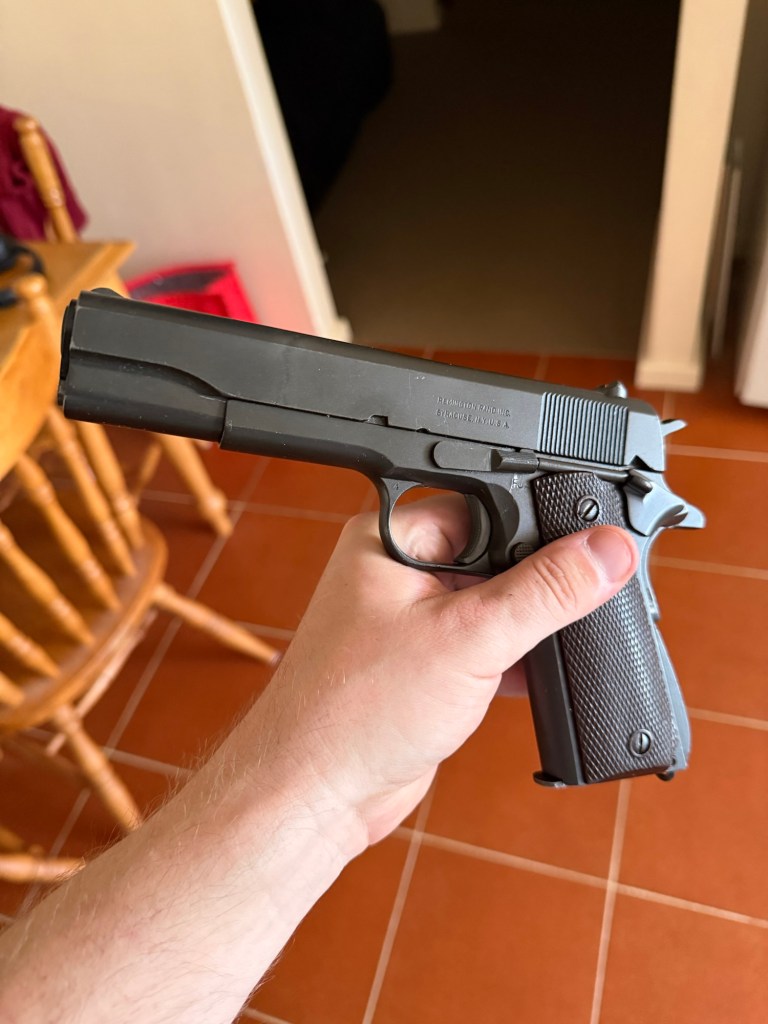
Did you know that colt, Ithaca and Remington Rand made 1.9 million 1911A1s with Remington Rand making the most at around 800,000. And all production stopped 1945. And that was enough to supply all US military up until 1985 when the Beretta M9 was made standard
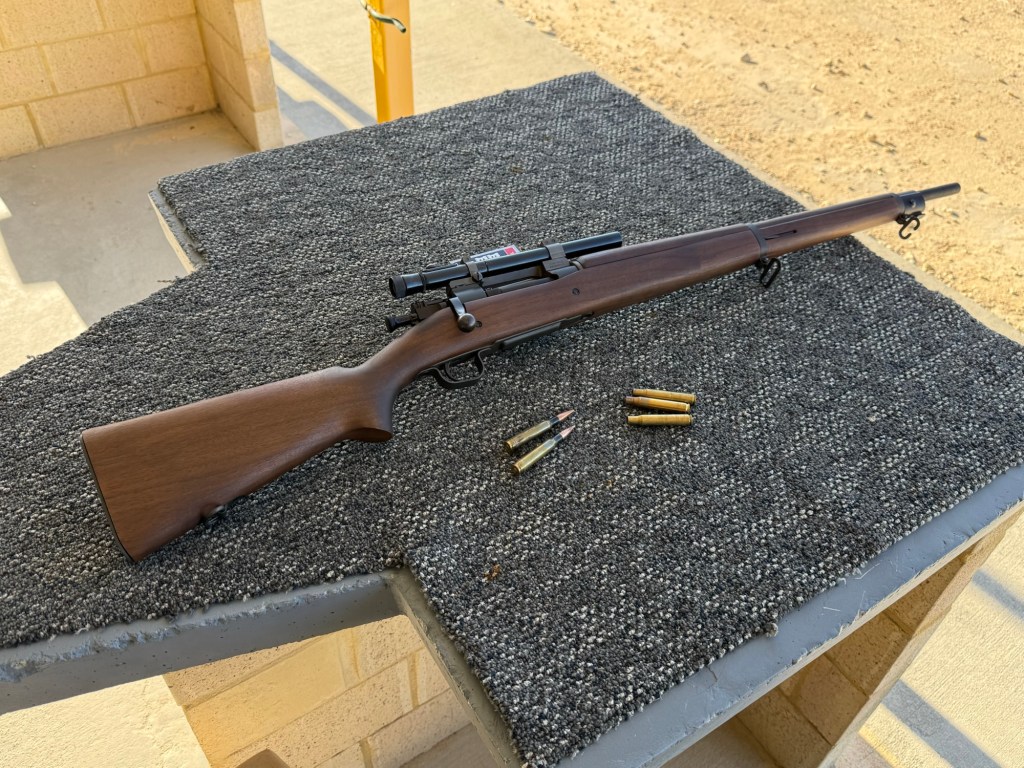
The rifle shown here is a replica of the famous American WW2 sniper rifle: The M1903A4. While it is not an original A4, it is built on a genuine M1903A3 action, which gives it real historical credibility. That said, the markings and serial numbers differ from those found on original A4 rifles.
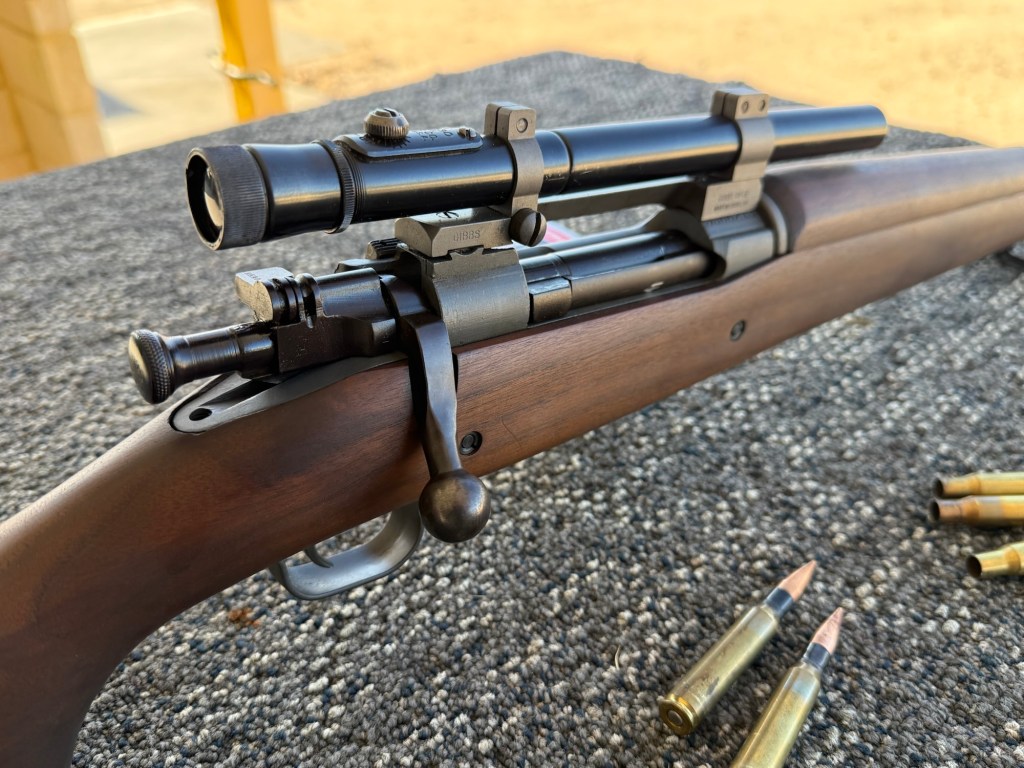
World War II marked the first time sniper rifles were widely used in combat. Early on, the U.S. relied on M1903 National Match rifles that were quickly adapted for sniper duties. Later, the military began converting large numbers of M1903A3 rifles specifically for precision shooting, designating them as the M1903A4. These rifles were produced without iron sights, but the muzzle was still machined to accept a standard front sight base. One-piece Redfield scope bases were mounted using the rear sight location and secured to the front receiver ring.
Although labeled as M1903A3s, true M1903A4 sniper rifles had unique receiver markings. The markings on the front receiver ring were split so they could still be seen with the scope base installed. These rifles also used carefully selected receivers and barrels that met very tight specifications, ensuring consistent accuracy.
The M1903A4 was officially adopted on January 14, 1943, more than a year after the U.S. entered the war. The government initially directed 20,000 M1903A3 actions for sniper rifle production, followed by another order of 8,365 rifles five months later. Production ended less than a year after it began, with just under 30,000 rifles completed. Despite this relatively short production run, the M1903A4 saw service in World War II, the Korean War, and even into the Vietnam War.
In combat, the rifle performed well out to about 600 yards. Beyond that distance, its effectiveness was limited by the optics of the time. Standard-issue Weaver scopes had low magnification, usually 2.2X or 2.75X, and small 0.75-inch tubes that restricted the field of view. While an 8X Unertl scope was approved as an option, it was rarely issued, making long-range target identification difficult.
Years later, Gibbs Rifle Company began producing faithful M1903A4 replicas. These rifles used newly manufactured parts combined with original Remington M1903A3 actions. The actions came from deactivated drill rifles acquired when Gibbs purchased Parker-Hale’s rifle division in the 1990s. Each action was carefully restored and tested for proper hardness, and original, unissued World War II-era bolts were fitted.
New four-groove barrels were installed, receivers were correctly drilled and tapped, and replica mounts and rings were added. The rifles were finished with a Hi-Lux/Leatherwood reproduction of the M73B1 scope, which closely matches the original except for being waterproof.
Me and my dad got my Gibbs M1903A4 rifle back in 2011.
The U.S. Model 1903 is a bolt-action rifle with dual locking lugs, a large Mauser-style claw extractor, and a three-position safety mounted on the bolt. It feeds from a five-round internal magazine that can be loaded one round at a time or by stripper clips. While stripper clips are still available today, they can’t be used on the 1903A4 because the scope mount blocks the guide. A small lever at the rear left of the action acts as both a bolt release and a magazine cutoff, allowing the rifle to be fired as a single shot while keeping a full magazine in reserve.
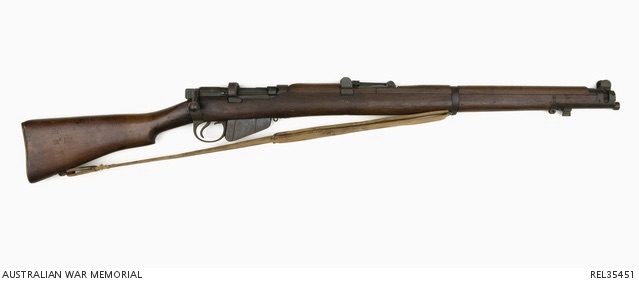
Its time to talk about the weapon of the ANZAC’s! Up until recently I thought that this rifle was only used in WW1. As I have always been well aware of the Lee Enfield No.4 which was the upgraded model. I thought that all commonwealth forces went into WW2 carrying No4’s but actually it turns out Australia only carried Lee Enfield No1 Mk3s. New Zealand apparently started with No1’s but slowly upgraded to the new No’4s as the war went on.
Now let’s dive into what makes this iconic rifle so legendary!
This rifle is by far the most well-known Lee–Enfield was rifle, it was introduced on 26 January 1907 with the Pattern 1907 bayonet. It featured simplified sights, a fixed charger guide, improved handguards and magazine design, and was adapted to fire the new Mk VII high-velocity .303 ammunition. Many earlier Lee–Enfield and Lee–Metford rifles were rebuilt to this standard, known as “Mk IV Cond.”
The No. 1 Mk III also included a cleaning kit stored in the buttstock, with a pull-through, cloths, and an oil bottle.
During World War I, the Mk III was considered too complex and costly to produce, so the simplified Mk III* was introduced in 1915. It removed features like the magazine cut-off, volley sights, and windage adjustment. Some changes were added gradually across factories. The magazine cut-off returned after the war and wasn’t fully phased out until 1933, with some rifles still using it into the 1960s.
The rifle was later adapted for grenade launching, using a removable cup and blank rounds to fire modified Mills Bomb grenades up to about 200 yards.
Because major factories couldn’t meet wartime demand, Britain used the “peddled scheme,” outsourcing production and quadrupling output in the first year of the war.
The Mk III* served widely in World War II across North Africa, Italy, the Pacific, and Burma. Australia and India continued producing it as a standard rifle, with Australia keeping it through the Korean War until replaced by the L1A1 SLR in the late 1950s. Lithgow stopped production in 1953.
India’s Ishapore factory later developed the 2A and 2A1 models, strengthened to fire 7.62×51mm NATO, and production continued into the 1980s.
The rifle became widely known simply as the “three-oh-three.”
I enjoyed writing about the pattern 1914 Enfield so much I must talk about US adaptation of that very rifle.
From a collector’s point of view, the M1917 Enfield is one of those rifles that quietly did the hard work of history, yet never quite got the credit it deserved.
Officially known as the United States Rifle, Calibre .30, Model of 1917, the M1917 is essentially an American adaptation of the British Pattern 1914 Enfield. Despite the name, it has nothing to do with the Lee–Enfield. Instead, it is a big, strong Mauser-inspired bolt-action rifle that became the most widely issued American rifle of the First World War.
Before the Great War, Britain was already questioning the limits of the SMLE and its .303 cartridge, especially after facing accurate long-range fire from Mauser rifles during the Boer War. This led to the development of a new rifle at Enfield, heavily influenced by Mauser design principles. The original plan was to chamber it for a powerful new .276 Enfield cartridge, but the round proved impractical under wartime conditions.
When war broke out, Britain urgently needed rifles and turned to American manufacturers. The design was reworked to fire the familiar .303 British cartridge and became the Pattern 14. Winchester, Remington, and Remington’s Eddystone plant all produced the rifle.
When the United States entered the war in 1917, it faced the same problem: not enough rifles! Rather than retool factories to make more M1903 Springfields, the U.S. wisely adapted the existing Enfield design to the .30-06 Springfield cartridge. The result was the M1917 Enfield.
Production was enormous. Between Winchester, Remington, and Eddystone, over two million M1917s were built, easily outnumbering the M1903. By the end of the war, around three-quarters of American troops in France were carrying the M1917.
The rifle earned a solid reputation for strength, reliability, and accuracy. One of the most famous users was Sergeant Alvin C. York, who carried an M1917 during the action that earned him the Medal of Honor.
Despite this, the M1917 never quite shook its “stand-in” status, even though it was arguably better suited to mass wartime production than the Springfield.
After the armistice, most M1917s went into storage, though many were later sold as surplus. A large number were sporterised, and the action proved so strong and popular that Remington built new sporting rifles from it as the Remington Model 30.
Various countries adopted or experimented with the rifle, including Honduras, which fielded a 7×57mm version, and others who rechambered surplus rifles to different calibres.
At the start of the Second World War, the M1917 returned to service in secondary roles. It armed artillery crews, chemical mortarmen, training units, and Home Guard forces in Britain. Canada also purchased tens of thousands to cover shortages.
The rifle saw service in surprising places long after its supposed retirement. It appeared with Chinese forces in Korea, in various post-war conflicts, and even today remains in active service with the Danish Sirius Dog Sled Patrol in Greenland, chosen for its reliability in extreme Arctic conditions.
From a collector’s perspective, the M1917 has real presence. It is long, heavy, and unapologetically robust. The action was originally designed for a very powerful cartridge, which explains its strength and smooth bolt operation.
A Mauser-style action with a distinctive dog-leg bolt handle Cock-on-closing operation, inherited from British practice An excellent rear aperture sight protected by sturdy “ears” A six-round magazine capacity in .30-06 A long, heavy barrel that contributes to excellent long-range accuracy
It is heavier than the M1903 Springfield, and its length made it awkward in trenches, but on the range it shines. The sight picture is superb, and the rifle has a solid, confidence-inspiring feel that collectors quickly appreciate.
Often overlooked in favour of the 1903 Springfield or the M1 Garand, the M1917 deserves far more respect. In many ways, it was the rifle that actually won America’s first modern war.
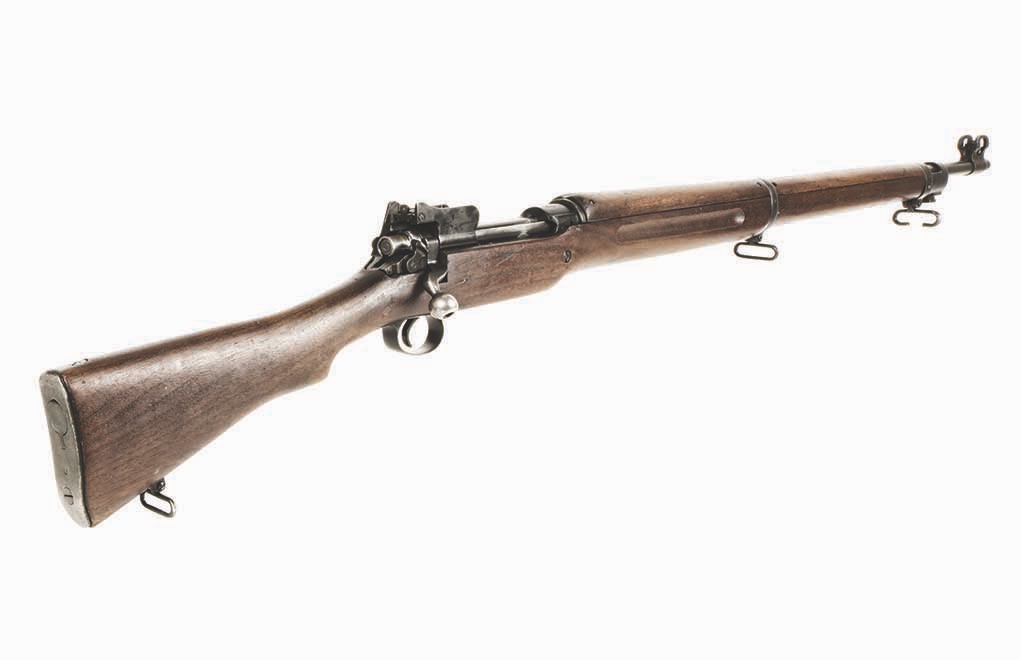
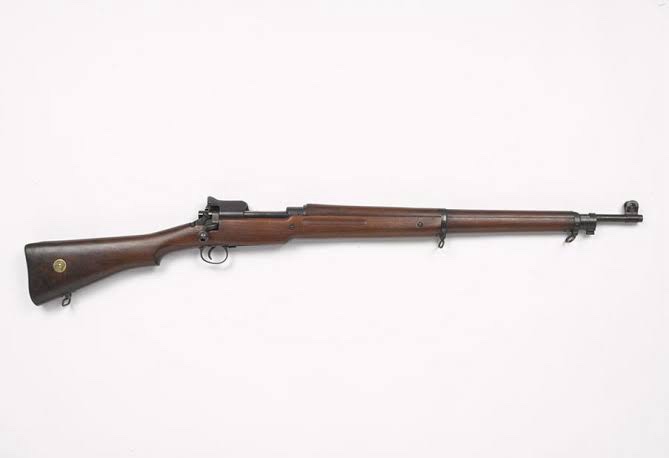
The .303 Pattern 1914 Rifle, better known simply as the P14, is one of those rifles that just looks right. Big, purposeful, and unapologetically overbuilt, it has a presence that immediately sets it apart from other First World War service rifles. With its distinctive dog leg bolt handle, massive receiver, and unmistakable protective sight ears, the P14 looks every bit the serious military tool it was designed to be.
Born out of hard lessons learned during the Boer War, the P14 was originally intended to fire the powerful .276 Enfield cartridge. War intervened and practicality won out, so the rifle was adapted to the familiar .303 British round. Because British industry was already stretched thin, production was handed off to American manufacturers, Winchester, Remington, and Eddystone, resulting in over a million rifles built across the Atlantic. Each maker left subtle differences, which only adds to the appeal for collectors today.
Although it never replaced the Short Magazine Lee Enfield as Britain’s primary infantry rifle, the P14 carved out a well earned reputation for strength and accuracy. It was heavier and slower to feed, but it was incredibly solid, and many shooters then and now consider it one of the most accurate rifles of the era. It is no surprise it was favoured as a sniper rifle in both world wars.
The design itself is fascinating. The action is large, smooth, and confidence inspiring, clearly descended from the Mauser system but refined with British ideas about rapid fire and ergonomics. Everything about it feels deliberate and robust, from the long bolt throw to the deep, well protected aperture sights. Pick one up and you immediately understand why people often describe it as being over engineered, in the best possible way.
For me, the P14 also has a personal pull. My uncle has a few examples, and I am genuinely looking forward to getting a proper look at them. Rifles like these are not just pieces of steel and wood. They are physical links to a period when military design was evolving rapidly under the pressure of global war. Seeing multiple P14s side by side, each with its own markings, wear, and character, is exactly the sort of thing that reminds you why collecting is so rewarding.
Officially declared obsolete in 1947, the P14 refused to fade quietly into history. Surplus rifles spread throughout the Commonwealth, where many were cherished by shooters and collectors alike. Today, the Pattern 1914 Enfield stands as one of the most interesting and visually striking bolt action service rifles ever produced. It may not have been the fastest or most practical, but it undeniably has style, substance, and soul.
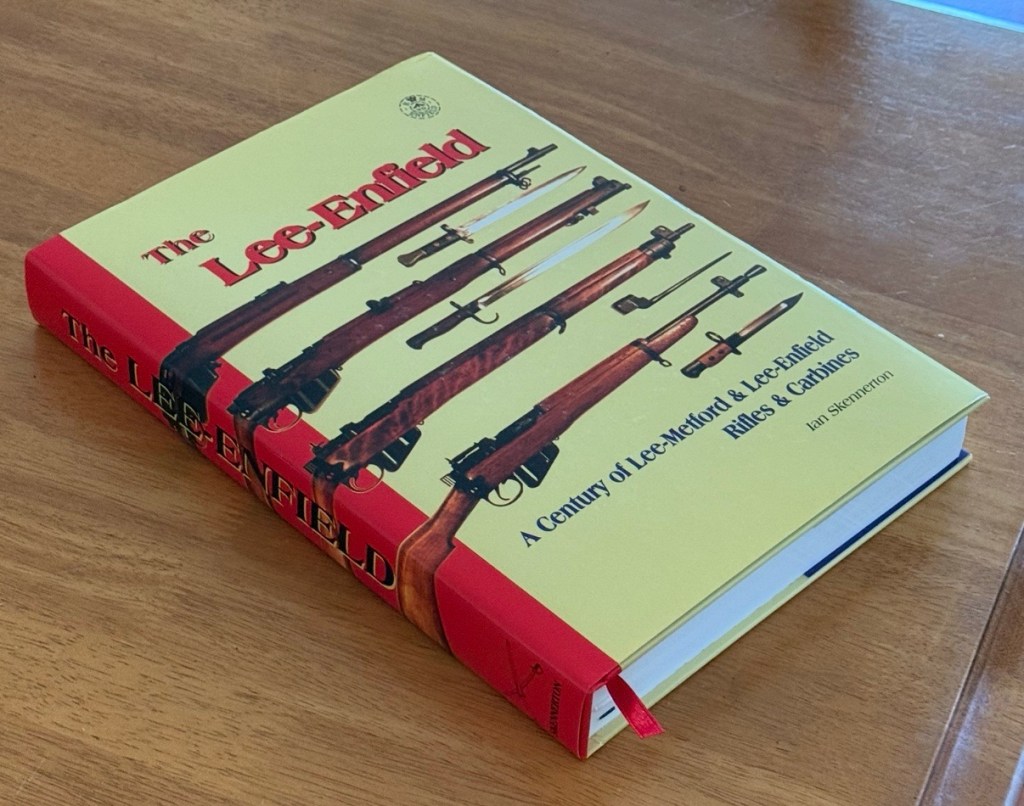
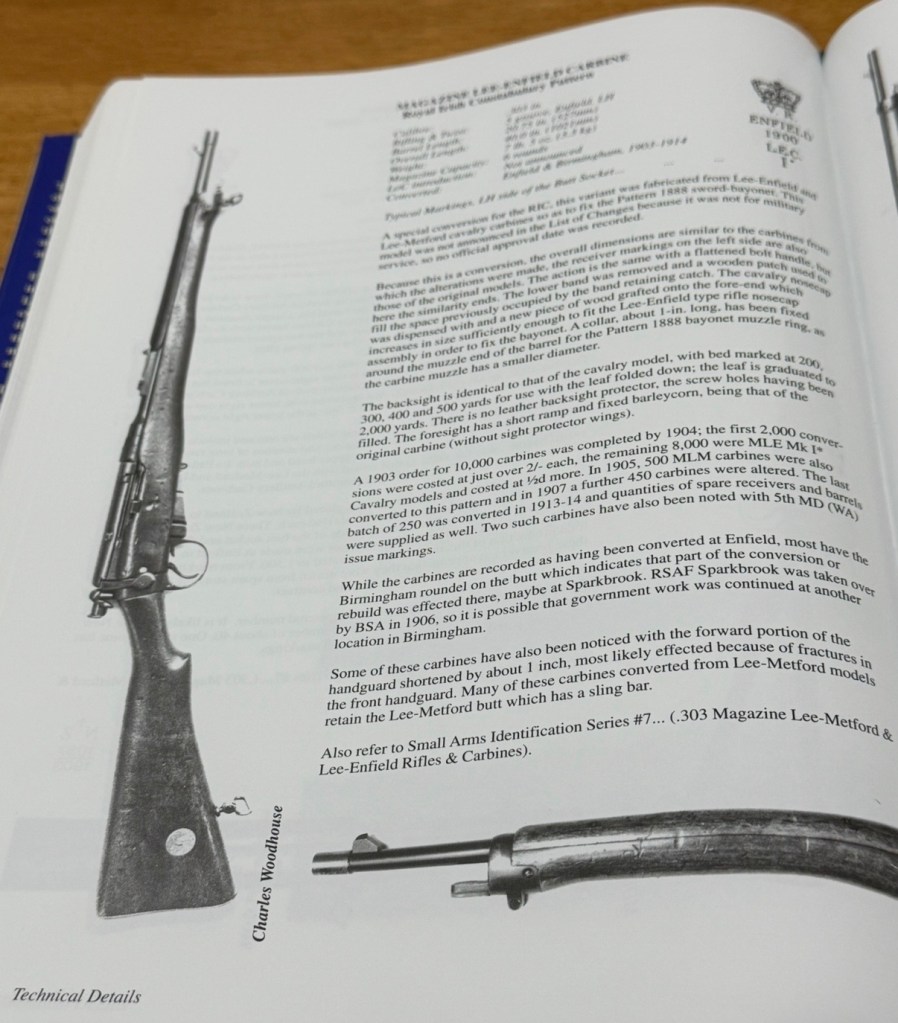
Bought this book recently as I have enjoyed researching the rare New Zealand carbine in my possession. It really does have it all. Everything you need to know about anything to do with the production and many variations of Lee Enfield rifles is in this book.
This is an impressive book. It weighs 2kg and measures 30.5 × 22 × 3.5 cm. It cost a pretty penny. I was lucky to find it on eBay secondhand for about $130 AUD but they are going from around $150 to $200 usually.
The exterior is excellent. The heavier dust jacket feels sturdy and comfortable to hold, and the built-in red, white, and blue ribbon markers are a thoughtful and helpful touch.
Going through the book it starts with the opening chapter, which covers basic model identification, is new and very useful, especially for practical reference. Placing it at the front of the book was a smart decision.
The book then returns to the origins of the Lee-Enfield, detailing why it was developed and who was involved. This section is with more information on Lee himself
I’ve only begun reading in depth, so I won’t attempt a full chapter-by-chapter review However, even a brief flick through shows the wealth of knowledge this book has. With a lot of content, photographs, and extensive use of colour throughout. I’m very much looking forward to spending more time with it.
In short, this is the definitive work on the Lee-Enfield. It sets a new standard not only for books on this rifle, but for firearms reference books in general. I highly recommend it.
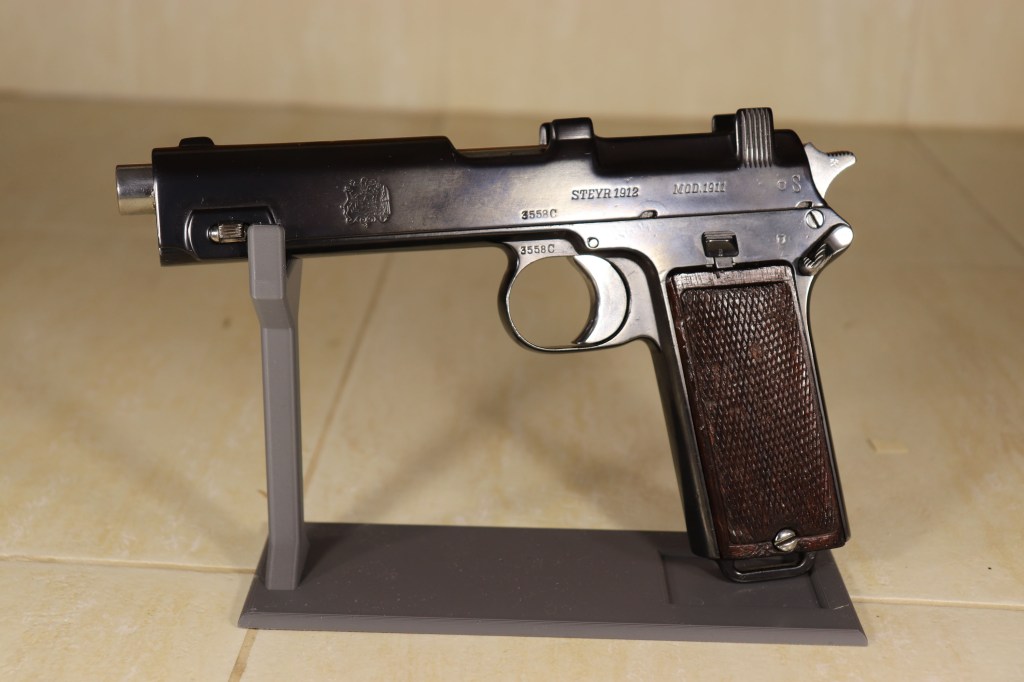
For this show and tell, I am presenting a fascinating piece of military history: the Chilean 1912 Contract Steyr-Hahn M1911 Service Pistol. This semi-automatic sidearm boasts a unique heritage and engineering, making it a rare and sought-after collector’s item.
The Steyr-Hahn M1911 is chambered in 9mm Steyr and utilises an 8-shot magazine, which is loaded via stripper clips. It features a 130mm (5 1/8″) barrel and is fitted with checkered wood grips, providing both style and functionality. The slide is proudly marked with the Chilean crest, “Steyr 1912”, “MOD.1911”, and “Ejercito de Chile”—the latter translating to “Army of Chile”. Collectors will also note various small proof marks and a prominent “S” on the firearm, all indicative of its authenticity and provenance.
The Steyr M1912, also known as the Steyr-Hahn, was developed by the Austrian firm Steyr Mannlicher in 1911. Its design is believed to be based on the mechanism of the earlier Roth-Steyr M1907, another innovative pistol of its era. Initially, the Steyr M1912 was created for use by the Austro-Hungarian Army and was officially adopted in 1912 as the M1912 pistol.
What makes this particular example especially rare is its connection to the Chilean military. In 1912, a contract for 5,000 Steyr-Hahn M1911 pistols was arranged for the Chilean Army. These pistols bear distinct markings that set them apart from their European counterparts, making them highly desirable among enthusiasts and historians alike.
Due to the limited number produced for the Chilean contract, surviving Steyr-Hahn M1911 service pistols from this batch are uncommon. Their historical significance, unique features, and connection to both Austrian and Chilean military history contribute to their collectability.
In summary, the Chilean 1912 Contract Steyr-Hahn M1911 Service Pistol stands as a testament to early 20th century firearm innovation and international military collaboration. Its rarity and rich backstory make it a true gem for any collector or enthusiast interested in the history of military sidearms.
Unfortunately I no longer own this piece as I sold it recently. This post will be my reminder of this unique pistol.