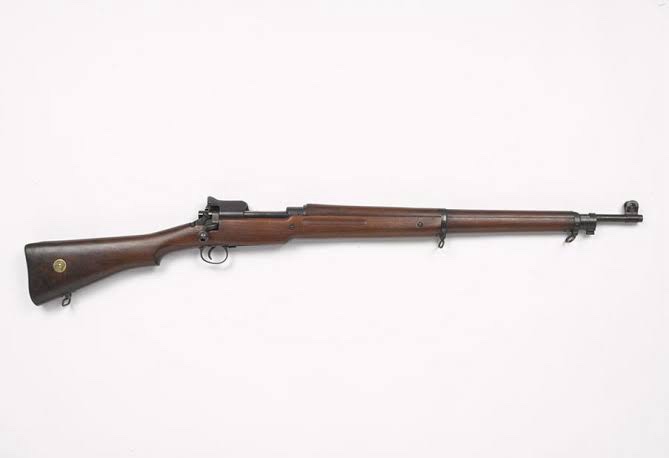
The .303 Pattern 1914 Rifle, better known simply as the P14, is one of those rifles that just looks right. Big, purposeful, and unapologetically overbuilt, it has a presence that immediately sets it apart from other First World War service rifles. With its distinctive dog leg bolt handle, massive receiver, and unmistakable protective sight ears, the P14 looks every bit the serious military tool it was designed to be.
Born out of hard lessons learned during the Boer War, the P14 was originally intended to fire the powerful .276 Enfield cartridge. War intervened and practicality won out, so the rifle was adapted to the familiar .303 British round. Because British industry was already stretched thin, production was handed off to American manufacturers, Winchester, Remington, and Eddystone, resulting in over a million rifles built across the Atlantic. Each maker left subtle differences, which only adds to the appeal for collectors today.
Although it never replaced the Short Magazine Lee Enfield as Britain’s primary infantry rifle, the P14 carved out a well earned reputation for strength and accuracy. It was heavier and slower to feed, but it was incredibly solid, and many shooters then and now consider it one of the most accurate rifles of the era. It is no surprise it was favoured as a sniper rifle in both world wars.
The design itself is fascinating. The action is large, smooth, and confidence inspiring, clearly descended from the Mauser system but refined with British ideas about rapid fire and ergonomics. Everything about it feels deliberate and robust, from the long bolt throw to the deep, well protected aperture sights. Pick one up and you immediately understand why people often describe it as being over engineered, in the best possible way.
For me, the P14 also has a personal pull. My uncle has a few examples, and I am genuinely looking forward to getting a proper look at them. Rifles like these are not just pieces of steel and wood. They are physical links to a period when military design was evolving rapidly under the pressure of global war. Seeing multiple P14s side by side, each with its own markings, wear, and character, is exactly the sort of thing that reminds you why collecting is so rewarding.
Officially declared obsolete in 1947, the P14 refused to fade quietly into history. Surplus rifles spread throughout the Commonwealth, where many were cherished by shooters and collectors alike. Today, the Pattern 1914 Enfield stands as one of the most interesting and visually striking bolt action service rifles ever produced. It may not have been the fastest or most practical, but it undeniably has style, substance, and soul.
 Baker arms collection
Leave a comment