Researched and written by Cory Baker
Have you ever had one of those moments when you suddenly realise you’re in possession of something truly rare and special? It’s an incredible feeling — one that doesn’t happen every day, but when it does, it’s unforgettable. One such moment happened for my family back in 2011, when my Uncle Ron came across an article on the internet. The title caught his attention immediately: “The Rarest of All Lee-Enfields: The New Zealand Carbine.”
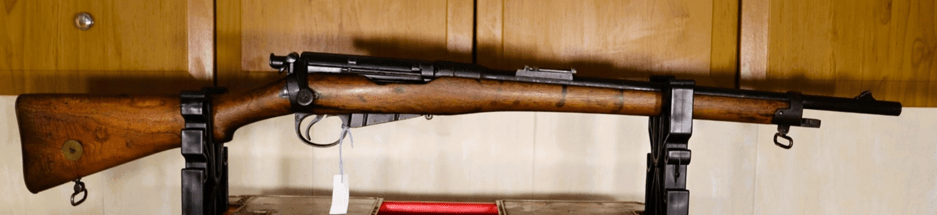
The photos in the article looked strikingly similar to a Lee-Enfield rifle my father, Kevin Baker, owned. After a bit of investigation, we were thrilled to discover that our rifle was indeed one of the very rare New Zealand Lee-Enfield carbines mentioned in the article. What an exciting moment — to realise we had such a remarkable piece of New Zealand military history in our hands!
Just how rare are we talking? It’s believed that only 1,500 of these carbines were ever produced. They were originally manufactured for use in the Boer War 1899 – 1902, intended to replace the Martini-Enfields carried by the New Zealand Mounted Riflemen. This upgrade came in response to the Boer forces’ superior, magazine-fed Mauser rifles.
So how did this rare treasure end up in my family’s possession? The story goes that it was first owned by my dad’s uncle Doug, a collector based in Katikati, New Zealand during the 1950s. Doug had close ties with both the New Zealand Army and Police, and it’s said he acquired the carbine from the police for his collection. Apparently, my grandfather owned a Lee-Enfield rifle that Doug admired, so the two arranged a trade —Doug swapping the NZ Carbine for my grandfather’s rifle, obviously not knowing just how valuable the carbine truly was.
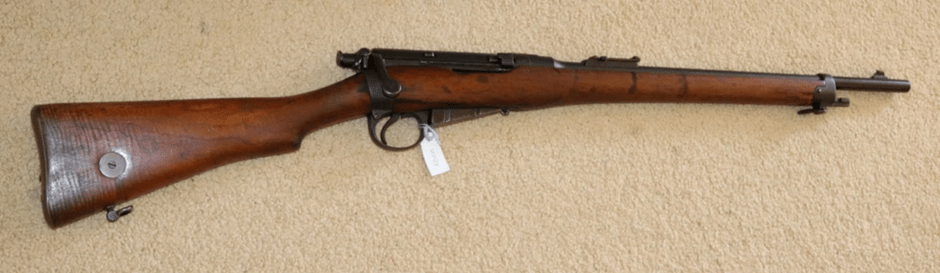
Years later, when my grandfather decided to pass his firearms down to my father and uncle, they decided to divide the collection between them with a coin toss. Dad won the coin toss, getting the first pick, he chose the NZ Carbine! It stayed in New Zealand for many years under my uncle’s care until, around 2019, Dad decided to bring it back home to Perth, where we live and where I grew up.
Recently, I’ve been diving into research on the NZ Carbine, and I’d love to share what I’ve discovered.
Around 1901, New Zealand was in the middle of rearming its forces with the new Magazine Lee-Enfield rifles. At the same time, the country needed to replace roughly 1,200 Martini-Enfield Artillery Carbines that had been sent off to South Africa with the early New Zealand soldiers fighting in the Anglo-Boer War. It makes perfect sense that these older Martini carbines would be swapped out for a newer magazine-fed version. Originally listed as “Carbine, New Zealand, Magazine, Lee Enfield; fitted to take the pattern 1888 sword bayonet”. (LEC 88).
Whether New Zealand specifically requested the LEC 88 or was simply offered it by the Royal Small Arms Factory (RSAF) isn’t entirely clear. What is clear, however, is that New Zealand became the only customer for this unique variant of the Lee-Enfield Carbine, ordering a total of 1,500 rifles along with spare parts and replacements. By 1902, the British Army had decided to move forward with the new Short Magazine Lee-Enfield (SMLE) across all branches, leaving no further demand for the LEC 88. As a result, New Zealand’s small order stands out as the only one of its kind — making these carbines incredibly rare today.
The story of the New Zealand Carbine actually begins nearly a decade before its official approval in 1900. While all military Lee carbines were made at the Royal Small Arms Factory (RSAF) in Enfield, other companies were also experimenting. In 1892, the Birmingham Small Arms & Metal Company (BSA&M) released a “trade pattern” magazine carbine, soon followed by the London Small Arms Company.
These early carbines had Metford barrels, a clearing rod, and a bayonet mount similar to the one later used on the Lee-Metford Mk II rifle. New Zealand put in an order for 1,000 of a remarkably similar carbine in 1900, along with a second order for a further 500 in 1902 Each batch was distinctive but differed slightly from the other. These are known as the “complete-carbine batches,” separate from later orders for spare parts.
There’s been a lot of debate about why the New Zealand government bought this carbine in the first place but as I mentioned before most believe it was to directly replace the martini action lee enfield that NZ riflemen were using. But whether it was ever actually used in the South African War is unknown. Unfortunately, most of the evidence is based on stories rather than records, since many official files have been lost. Apparently there was a fire at the Wellington government building, which explains why a lot of this information has been lost.
The first batch of carbines seems to have been intended for New Zealand-based units like the field artillery, engineers, and naval artillery—not for the troops fighting in South Africa. The fifth group of soldiers left in March 1900, two months before the carbine was even approved, and the sixth departed in January 1901, likely before the rifles even reached New Zealand.
An Auckland Star report from August 1901 stated that the new Lee-Enfield magazine carbines were being issued to local volunteer units, not overseas forces. This suggests the carbines arrived mid-1901 and stayed in New Zealand. Even with 1,500 made, there wouldn’t have been enough for all 6,500 soldiers who served in South Africa. It is quite likely that these rifles were never used in the war.
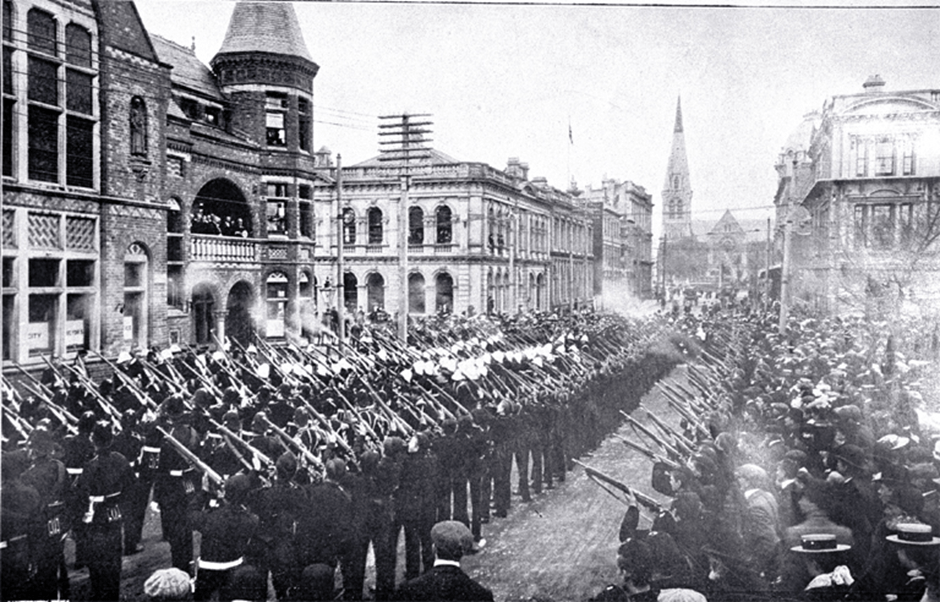
What we do know for sure is that most, if not all, of the New Zealand carbines were in the country by mid-1902. A well-known photo, the “Feu de Joie,” shows Christchurch Naval Volunteers using them during a parade for King Edward VII’s coronation celebrations in June 1902. Since the war in South Africa ended only a month earlier, it’s clear the carbines had already been in New Zealand for some time.
After the war, the newly formed Volunteer units received both Long Magazine Lee-Enfields (“Long Toms”) and some NZ carbines. The Volunteer Corps, made up of local militias, existed from 1865 until 1909, when it became the Territorial Army. Below is a 1907 photo shows hundreds of Christchurch Volunteers with NZ carbines celebrating New Zealand’s new dominion status.
Around this time, as the military shifted to a single standard rifle—the SMLE—the New Zealand carbines were gradually passed down to cadet units. In June 1903, the Auckland Star reported that the Christchurch Queen’s Cadet Corps was trading in its old Martinis for “new magazine Lee-Enfield carbines.” By 1913, records show 1,485 carbines issued to cadets, only slightly fewer than the total originally ordered.
Some of these carbines later went to the New Zealand Police and were still in use during World War I. Historian James Cowan describes their use during the 1916 arrest of Māori leader Rua Kēnana, when police forces armed with rifles and revolvers were sent to detain him. Rua was acquitted of treason but served two years for resisting arrest. You can tell they are New Zealand carbines by how close strap is to the end of the back.
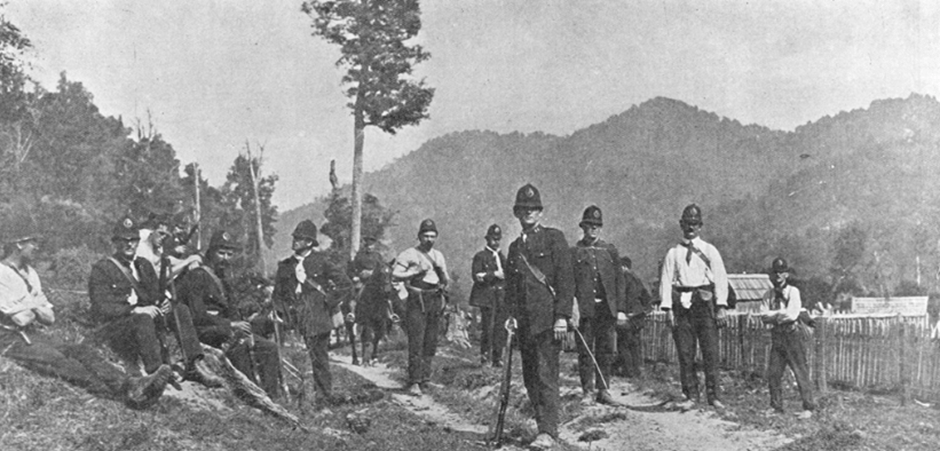
Evidence suggests that the “rifles” mentioned by Cowan were actually New Zealand carbines. In a photo of the police column heading to Rua Kēnana’s settlement, several officers at the front are clearly carrying short carbines—not Long Toms, which would have been much longer. The visible pistol grip rules out the Martini-Enfield, and the shoulder slings confirm they weren’t cavalry models. Another photo from the same event shows police with the same short, sling-fitted carbines—almost certainly New Zealand Carbines.
This finding is especially exciting for me because it perfectly matches my uncle’s story about how our family came to own our NZ Carbine. My Dads uncle obtaining it from NZ police!
This exciting piece of New Zealand military history is one of the 5 known examples currently in Australia according to a survey of known carbines, conducted in 2014. Our rifle has the serial number of 878 which nicely places it within the first batch.
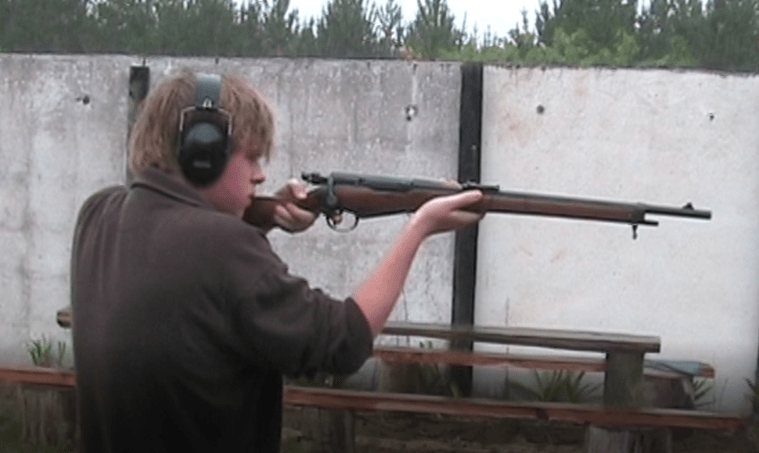
I’ve even been lucky enough to shoot this rifle in the past while it was still in NZ. I think that was before we realised how rare it is. But it’s in good condition considering it’s over 100 years old. My uncle had always taken really good care of it for us over the years. Unfortunately, dad’s NZ carbine, is now my NZ Carbine. Sadly my wonderful dad, Kevin passed late 2024. So it’s currently in storage and it is waiting to be added to my collection as I sort out my licensing. It’s an honor to share this piece with you all and I think my dad would be proud that I’m going to hold on to his old and surprisingly rare rifle for him.
References
AS 1901: Auckland Star, 14 August 1901. AS 1902: Auckland Star, 7 June 1902. AS 1903: Auckland Star, 18 June 1903.
Image ref. CCL Photo CD 4, IMG0102
(Photo: Auckland Weekly News.)
 Baker arms collection
Leave a comment