Written by Kevin Baker, edited by Cory Baker.
I often wondered where my passion for collecting and history came from, but I guess it all started when I was a boy, I used to stay on my grandparents farm over school holiday’s and fossick through their hot water cupboard where my grandfather kept all his treasures that he had collected when he went off to WW1, one that sticks in my mind is a very thick and wide army belt that was and still is studded with pins and badge, Grandfather used to collect these badges to fill his belt while he was reviving in England, I have the belt in my collection and it is my most precious possessions, this all leads me to the story of how my grandfather John Leslie Hume went to WW1 on a ship with his best freind Jim Earl, as the story goes grandfather got sick from the Spanish flu, the two of them got separated on the ship so Jim went looking for him and found him laying around the deck , Jim nursed grandfather through the worst of the flu and into reasonable health saving his life, fast forward till the internet came about and I start researching Troopships and my Grandfathers name and found his army papers and the name of the ship they traveled on, the Tahiti.
The troops aboard the Tahiti including my grandfather and Jim were some of the last replacements sent to the Western Front from new Zealand, they were also some of the first New Zealanders known to suffer from the infection of the Spanish flu. Further research had me reading a diary written by another soldier who had been on the same voyage.as I read this diary some of the story’s of grandfather laying around the deck rang true, the ship was so over crowded with very little ventilation, men were out on the deck trying to get fresh air and space, by the sound of it the Spanish flue was picked up at Freetown, the capital of Sierra Leone, Upon arrival the officers aboard received reports of illness in Freetown, which had just become infected by the deadly second wave of the 1918 influenza, and those onboard were prevented from disembarking, but This did not prevent local workers from resupplying the ship as it waited in harbour, The Tahiti left Freetown on the 26 of august, On the day of sailing influenza case patients began to be admitted to the onboard hospital, soon after that the burials at sea started, finally reached Plymouth on 10 September, 1918. 68 men had died, and another nine would pass away ashore.
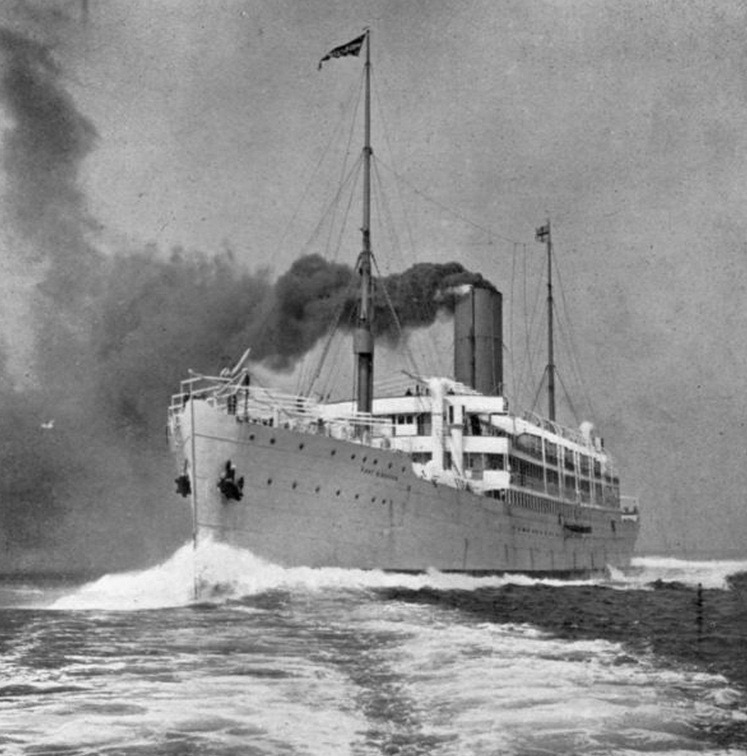
The situation onboard was so severe that special trains were sent to Plymouth to transport the sick to influenza hospitals. Six weeks after arrival in Britain, only 260 of more than 1200 troops from the ship were fit for service. Seven percent of those who started the voyage from New Zealand died from the influenza, making the outbreak on the Tahiti several times more severe than that which eventually struck New Zealand.
None of the 40th Reinforcements soldiers experienced combat as part of WWI; the war ended on November 11, 1918.
A few interesting facts I learnt about the ship herself, She was launched in 1904 in Scotland as RMS Port Kingston for a subsidiary of Elder Dempster Lines. In 1911 the Union Steamship Company of New Zealand bought her and renamed her the Tahiti , after her service as a troop ship she was returned to her owner, In 1927 Tahiti collided with a ferry in Sydney Harbour, killing 40 ferry passengers.
In 1930 Tahiti sank without loss of life in the South Pacific Ocean due to flooding caused by a broken propeller shaft.
Cheers
Kevin James Baker
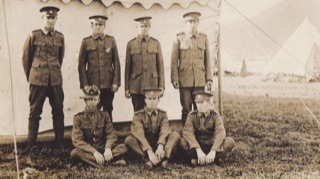
John Leslie Hume No 76930 40th Reinforcement. NZEF.
Born 19th Nov 1898 at Devonport Auck
Died 28th Oct. 1977
 Baker arms collection
Leave a comment